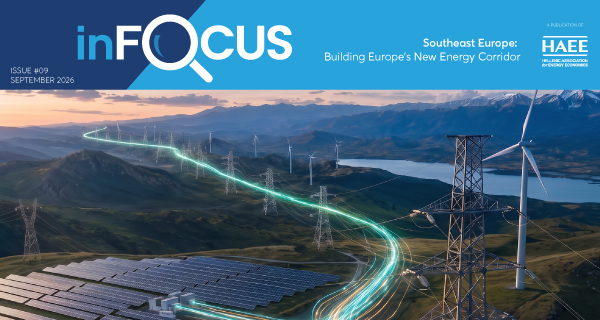
The latest issue of InFocus #9 – Southeast Europe: Building Europe’s New Energy Corridor, which looks at the changes shaping Europe’s energy landscape and the growing strategic role of Southeast Europe, is now available. In Issue #09, Southeast Europe emerges as a key energy corridor connecting the Eastern Mediterranean and the Black Sea with Central Europe and the wider EU. As Europe adapts to new geopolitical realities and changing market conditions, the region’s expanding infrastructure and stronger cross-border cooperation are creating new routes for gas, electricity and renewable energy. This edition highlights the development of the Vertical Corridor, which is strengthening regional energy security and enabling more flexible north–south flows. It also examines how Greece and Bulgaria are taking on a growing role as gateways for new energy flows, supported by LNG terminals, pipeline interconnections and an increasingly connected regional network. Beyond gas, the publication looks at Southeast Europe’s growing role in the energy transition. Enhanced electricity interconnections, rising renewable capacity, new storage projects and emerging flexibility solutions are supporting a more integrated regional power system and creating new opportunities for cross-border electricity trade. Looking ahead to 2035, InFocus considers what will be required for Southeast Europe to further develop as a European energy hub. Infrastructure investment, regional cooperation and a supportive policy framework will be important in enabling the region to contribute to both security of supply and decarbonisation. This issue also features exclusive member articles from Faria Renewables, Protasis, and Trans Adriatic Pipeline (TAP), offering expert perspectives on renewable energy, storage, infrastructure resilience and the technologies contributing to the transformation of Europe’s energy system. InFocus Issue #09 provides a clear and concise overview of the developments taking place across Southeast Europe and their wider implications for Europe’s energy system.
📥 You can read the issue in the link.
|